Category: Financial Services


Private Sector Credit Extension Report (PSCE), November 2022

Analysis

Credit extended to the private sector (individuals and businesses) increased to N$ 117,802 million from N$ 117,219 million recorded in October 2022. This translated into a slight monthly increase of 0.5%. The slight monthly increment was driven by the demand for overdrafts by businesses and other loans and advances by households. The demand for credit by businesses continues to be subdued due to the lower demand and repayments in other loans advances and overdrafts. (Figure 1)

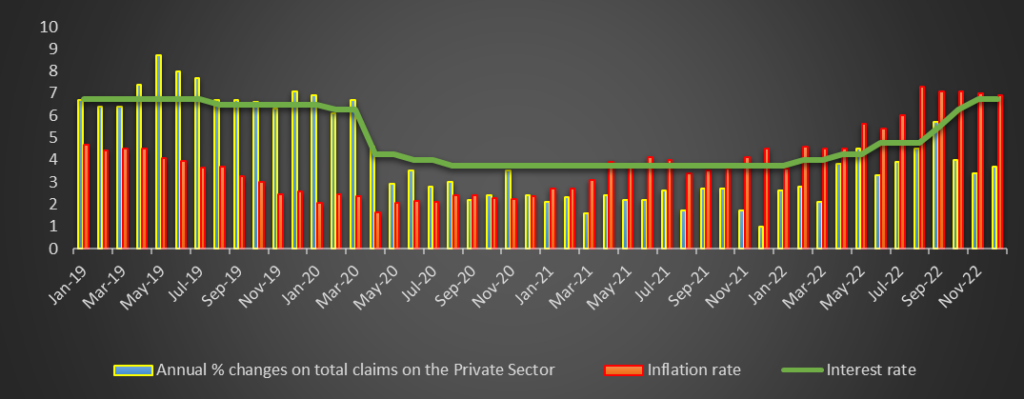
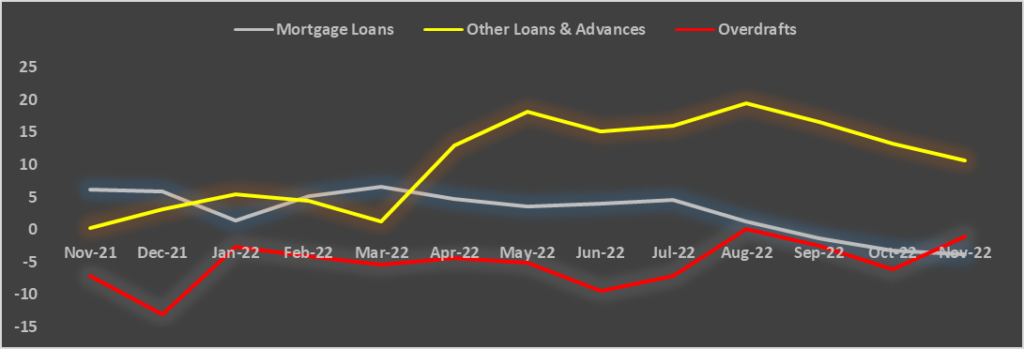
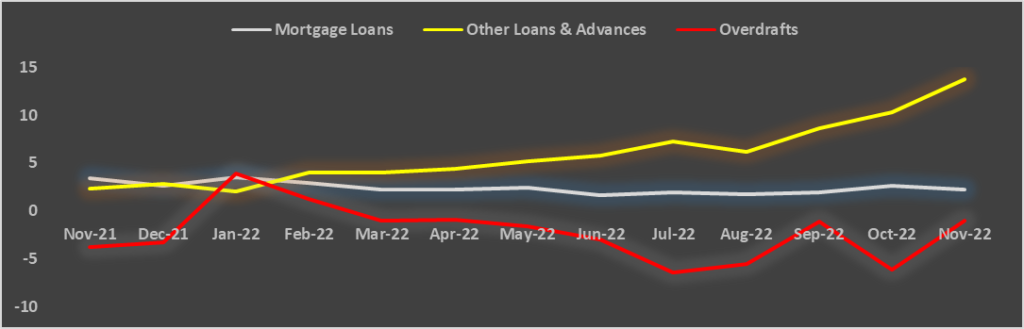
On an annual basis, total credit extended to the private sector increased by 3.7% in November up from 2.1% recorded in November 2021. The annual growth rate was mainly driven by growth recorded for other loans and advances for businesses and households by 10.7% and 13.8%, respectively. This is an indication that businesses and households turned to other loans and advances as a line of credit instead of their usual line of credit. The corporate sector remained anxious about piling more debt amid rising interest rates at the back of the uncertain economic environment. According to the Bank of Namibia, the low demand for credit by the business sector corporate sector compliments the growth in the household sector during the period under review. (Figures 2 & 3).

Figure 1: Annual % growth rates on Total Credit Extended to the Private Sector vs. Repo Rate & Interest Rate, (January 2029- November 2022)
Source: BON, NSA & HEI RESEARCH


Figure 2: Annual % changes for Credit Extended to Businesses per category, (November 2021-November 2022)
Source: BON & HEI RESEARCH

Figure 3: Annual % changes for Credit Extended to Individuals per category, (November 2021-November 2022)
Source: BON & HEI RESEARCH

Outlook

We expect slow growth in the Private Sector Credit Extension over the short to medium term. Households and businesses remain uncertain about the cost of borrowing and thus cautious in making credit decisions.
Private Sector Credit Extension Report (PSCE), August 2022

Analysis

Credit extended to the private sector (individuals and businesses) increased to N$ 109,737 million from N$ 109,298 million recorded in July 2022. This translated into a slight monthly increase of 0.4%. The increase continues to be at the backdrop of an upturn in demand for credit by businesses for overdrafts and other loans and advances, while growth for households declined significantly as the cost of living continues to rise. See figure 1 below.

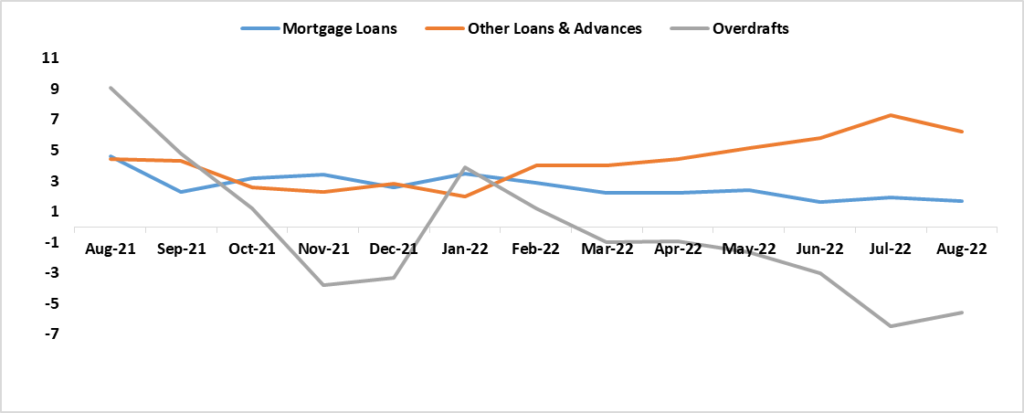
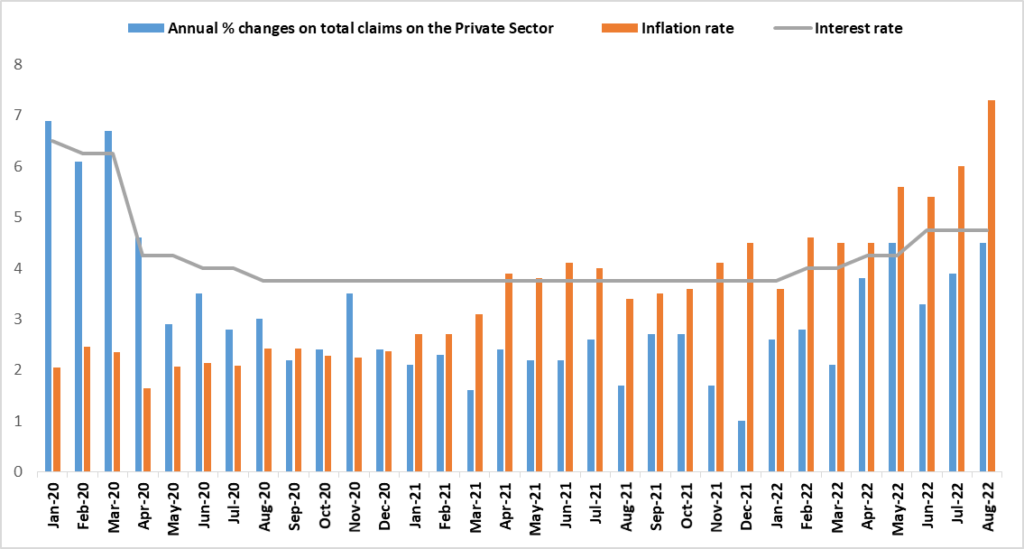
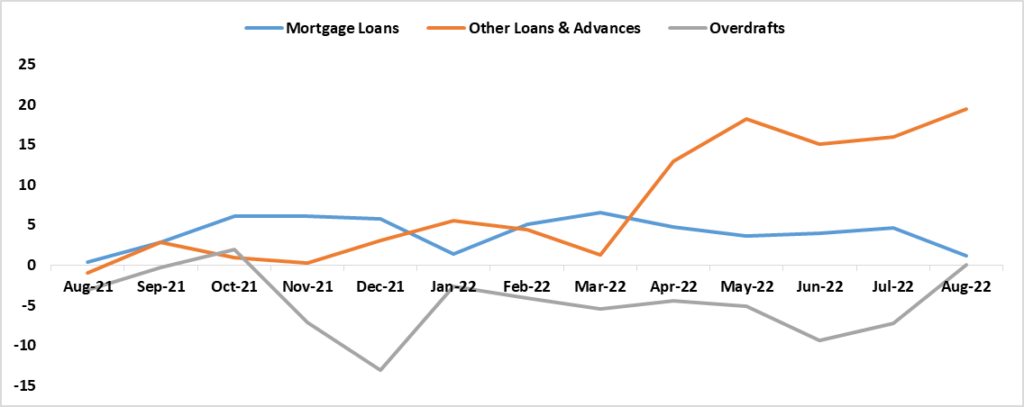
On an annual basis, total credit extended to the private sector increased by 4.5% in August up from 1.7% recorded in August 2021. This was mainly derived from growth recorded for overdrafts and other loans and advances for businesses by 0.1% and 19.4%, respectively. This is an indication that confidence is returning albeit at a slow pace. According to the Bank of Namibia, businesses in the mining and service sectors have become the main contributors to businesses’ credit growth due to the high demand for overdrafts which has drastically increased, recovering from negative territory. However, the demand for credit for households recorded no growth during the period under review. This clearly indicates that households lack the confidence to take up credit. See Figures 2 & 3.

Figure 1: Annual % growth rates on Total Credit Extended to the Private Sector vs. Repo Rate & Interest Rate, (January 2020- August 2022)

Source: BON, NSA & HEI RESEARCH

Figure 2: Annual % changes for Credit Extended to Businesses per category, (August 2021-August 2022)

Source: BON & HEI RESEARCH

Figure 3: Annual % changes for Credit Extended to Individuals per category, (August 2021-August 2022)

Source: BON & HEI RESEARCH

Outlook

The continuous improvements in domestic economic activity especially in the mining and services sectors could drive up the demand for credit in the short to medium term. We project a minimal growth in the Private Sector Credit Extension for the remaining months of 2022. Notwithstanding this, the anticipated monetary policy tightening by the central bank could also threaten businesses and individuals confidence to take up credit.

Private Sector Credit Extension Report (PSCE), July 2022

Analysis

Total credit extended to the private sector (individuals and businesses) amounted to N$ 109,323 million for July 2022 from N$ 108,963 million recorded in June 2022. This translated into a slight increase of 0.3%. The increase was against the backdrop of an upturn in demand for credit by businesses for the category of other loans and advances and the mortgages category for households augmented an increase in the standard of living. See figure 1 below.

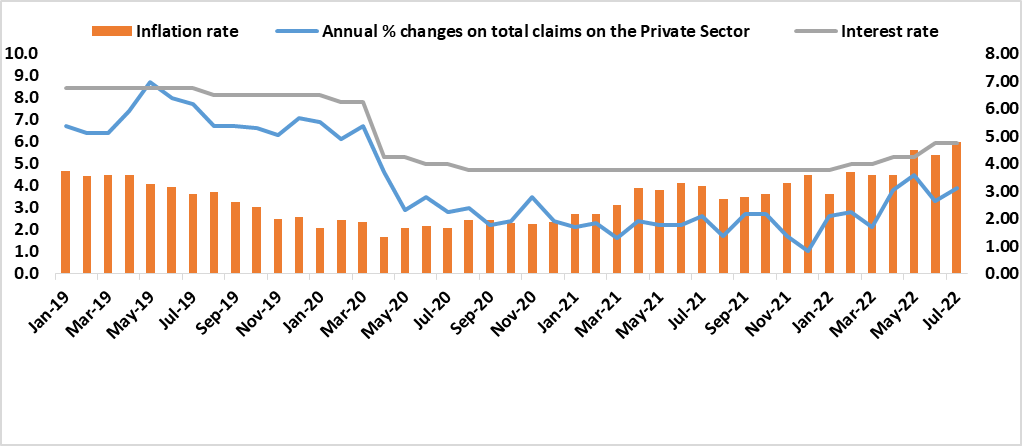
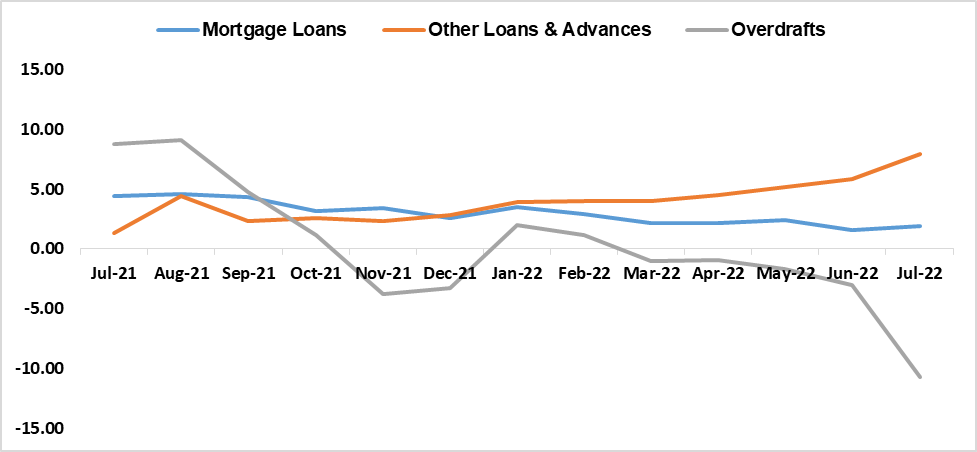
On an annual basis, total credit extended to the private sector increased by 3.9% up from 3.4% recorded in July 2021. An increase in the annual growth rate was mainly derived from growth recorded for other loans and advances for businesses and the uptake for mortgage credit for both households and businesses by 15.7% and 7.9%, respectively. This is an indication that confidence is returning albeit at a slow pace. According to the Bank of Namibia, businesses in the transport, mining, health, and service sectors have become the main contributors to businesses’ credit growth due to the high demand for other loans and advances and it has been on an upward trajectory since the beginning of the year. However, the demand for overdrafts for both households and businesses recorded no growth since January 2022. This speaks to the overall affordability of credit and tightening of overall general spending. See Figures 2 & 3.

Figure 1: Annual % growth rates on Total Credit Extended to the Private Sector vs. Repo Rate & Interest Rate, (January 2019- July 2022)

Source: BON, NSA & HEI RESEARCH

Figure 2: Annual % changes for Credit Extended to Businesses per category, (July 2021-July 2022)

Source: BON & HEI RESEARCH

Figure 3: Annual % changes for Credit Extended to Individuals per category, (July 2021-July 2022)

Source: BON & HEI RESEARCH

Outlook

Looking forward we expect credit growth to continue on a slow upward trend for the rest of the year 2022. This could be driven by improved credit scores for households especially mortgages as a result of an increase in housing benefits by 11% for government employees. However, the current interest rate hike cycle further possess a risk to the demand for credit as this further constrains consumers and business spending patterns. 

Private Sector Credit Extension Report (PSCE), June 2022

Analysis

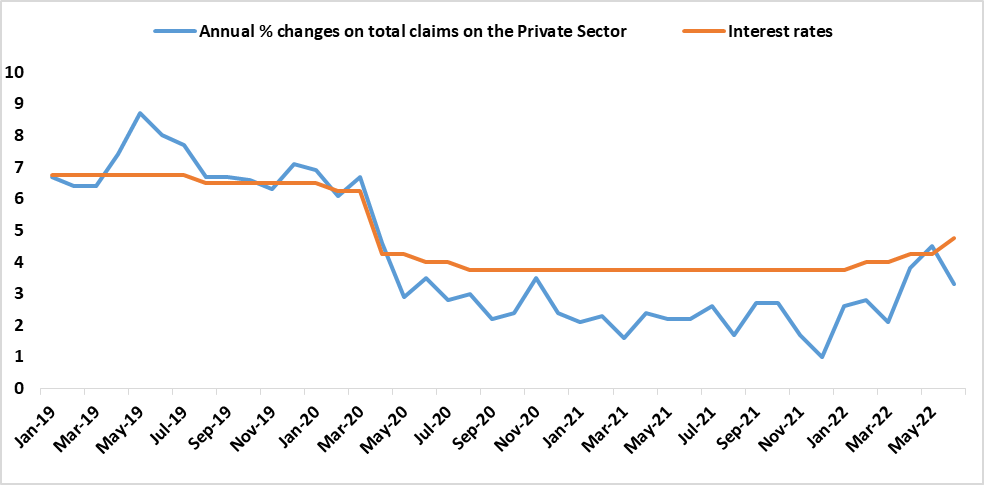
Total credit extended to the private sector (individuals and businesses) declined to N$ 108, 963 from N$ 109, 737 recorded in May 2022, which translates into a decline of 0.7%. The decline was driven by a drop in credit extended to businesses for the category of other loans and advances and the mortgages category for households. Additionally, the drop could also be attributed to a rise in the repo rate in June 2022 which resulted in a decrease in demand for credit for households and businesses. See figure 1 below. An increase in the repo rate has a negative impact on the demand for credit. 

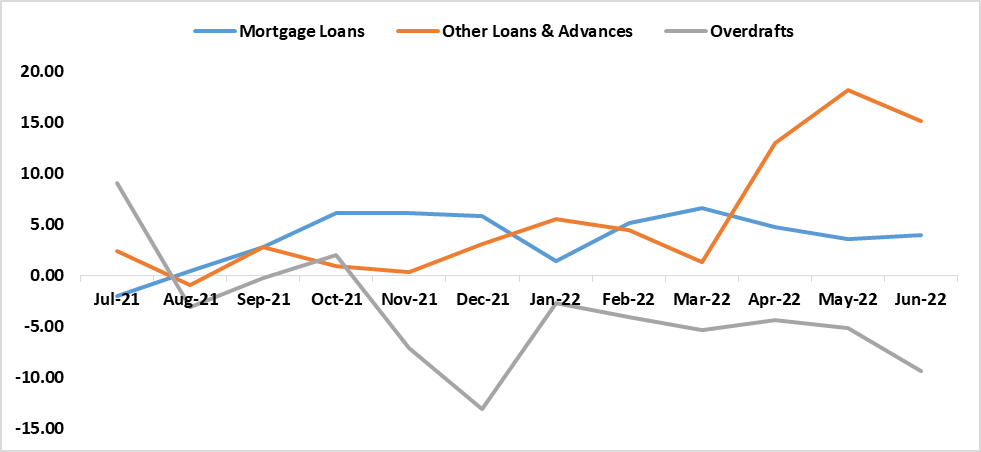
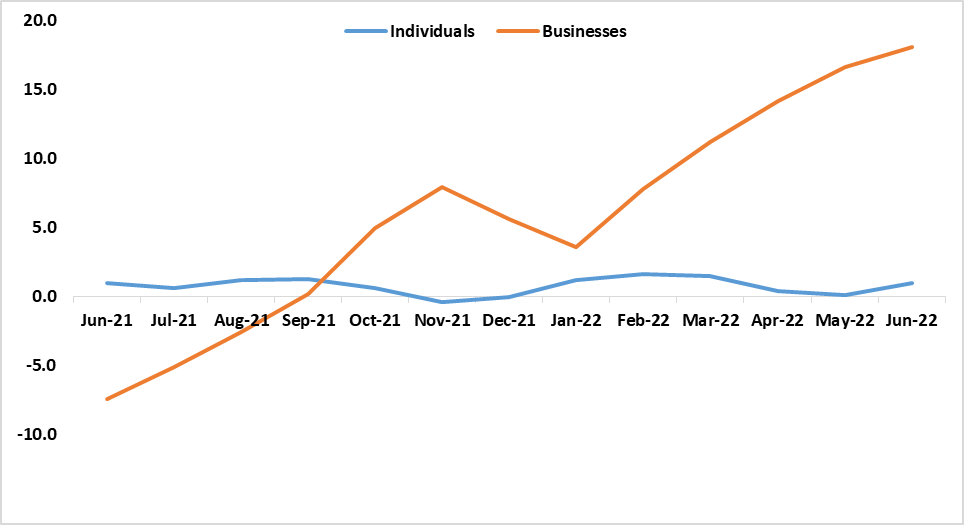
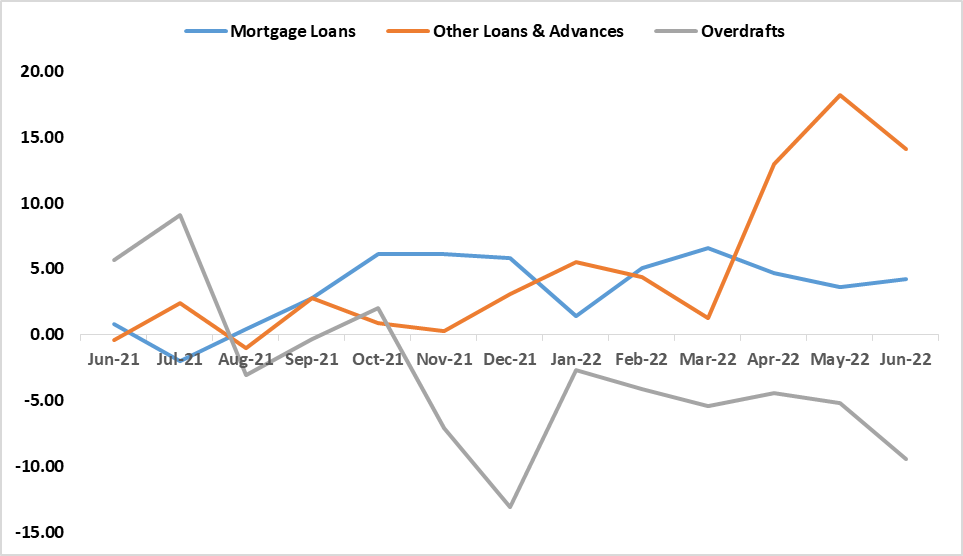
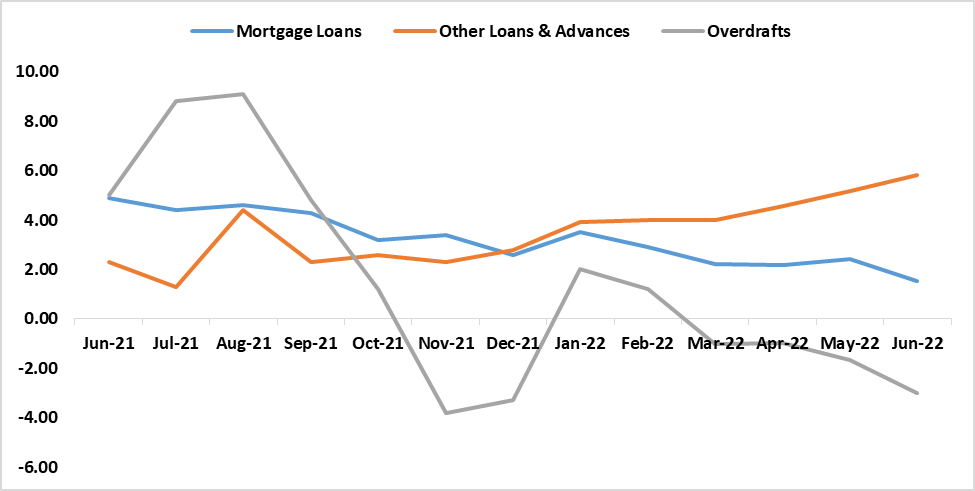
On an annual basis, total credit extended to the private sector increased by 3.3% up from 2.2% recorded in June 2021. An increase in the annual growth rate was mainly derived from growth recorded for installment and leasing for businesses and the uptake for other loans and advances for both households and businesses by 5.8% and 14.1% respectively. This is an indication that confidence is returning albeit at a slow pace. According to the Bank of Namibia, businesses in the energy, commercial, and mining sectors have become the main contributors to businesses’ credit growth due to the high demand for other loans and advances as it has been on an upward trajectory since June 2021. However, the demand for overdrafts for both households and businesses has declined significantly since the beginning of the year which speaks to the overall affordability and tightening of general spending. See Figures 3 & 4.

Figure 1: Annual % growth rates on Total Credit Extended to the Private Sector vs. Repo Rate, (January 2019- June 2022)

Source: BON & HEI RESEARCH

Figure 2: Individuals vs. Businesses Instalment and Leasing, Annual % Changes, (June 2021-June 2022)

Source: BON & HEI RESEARCH

Figure 3: Annual % changes for Credit Extended to Businesses per category, (June 2021-June 2022)

Source: BON & HEI RESEARCH

Figure 3: Annual % changes for Credit Extended to Individuals per category, (June 2021-June 2022)

Source: BON & HEI RESEARCH

Outlook

The current interest rate hike cycle means that the Bank of Namibia will increase the repo rate at its next MPC meeting. This could mean a further tightening of household and business credit. We expect a sluggish recovery in credit extension in the short to medium term.

Private Sector Credit Extension PSCE Report: May 2022

Analysis

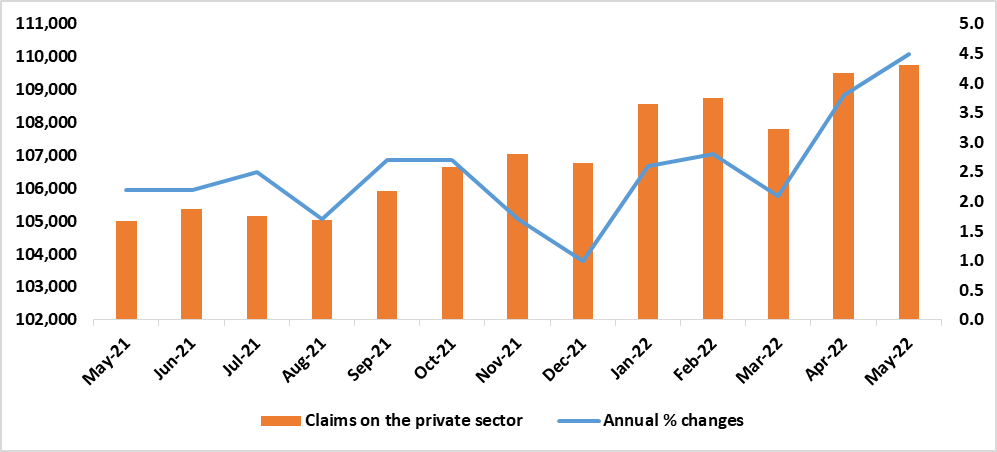
The total credit extended to the private sector (households and businesses) amounted to N$109.7 million in May 2022, with businesses and households taking up to N$46,889 million and 62,596 million respectively. (See figure 1 below). Total credit extended to the private sector recorded growth of 4.5% in May 2022 from 3.8% recorded in April 2022. This was driven by credit uptake for mortgages and other loan advances for households and growth recorded in the commercial and retail services sector as well as commercial rental property space for businesses. (BON, May 2022).

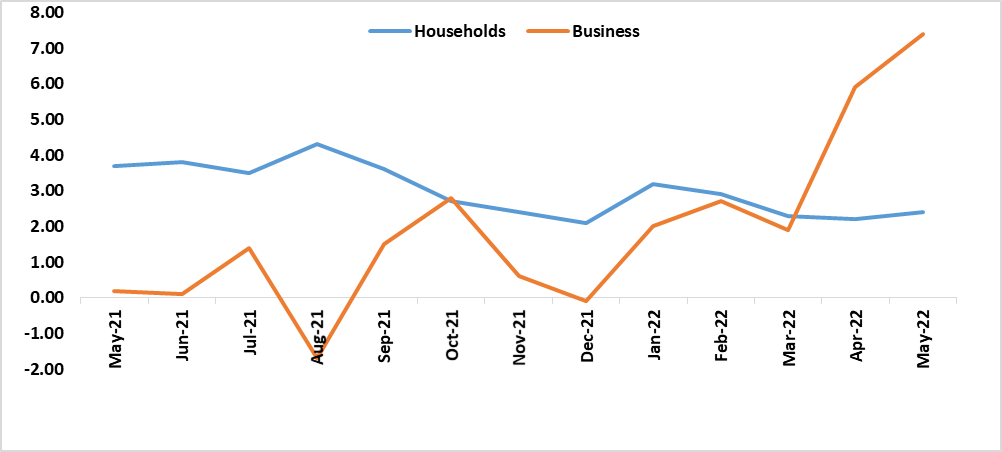
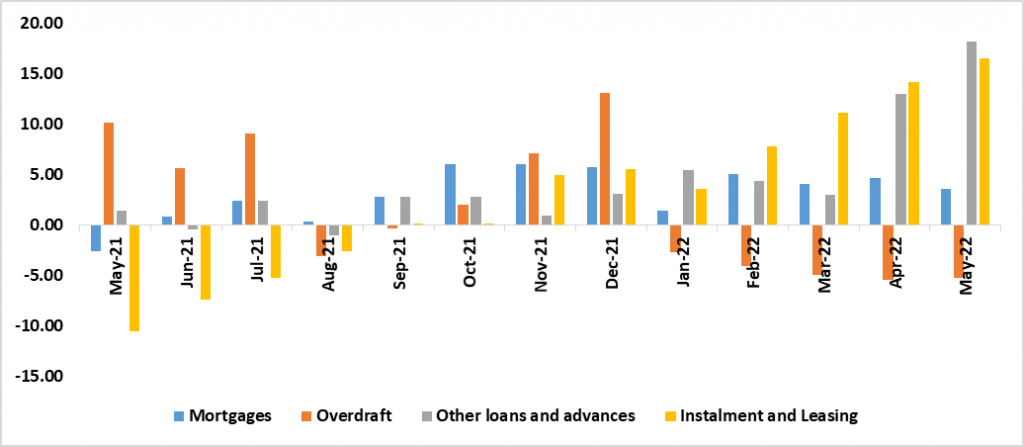
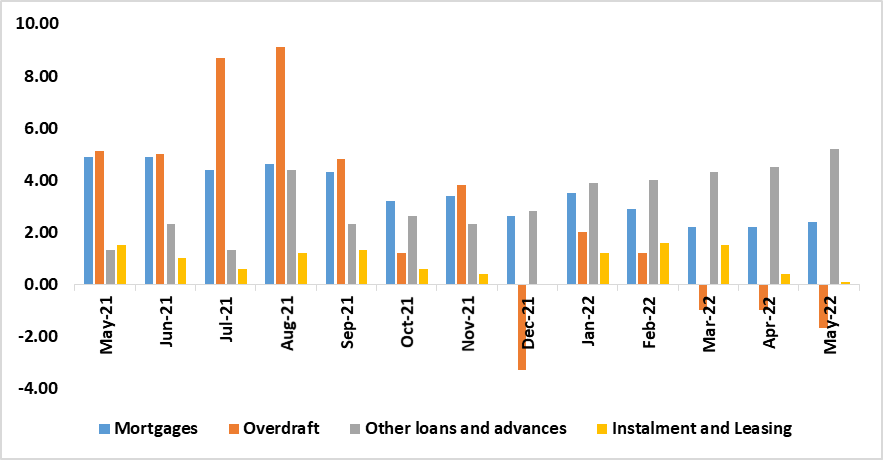
On an annual basis, Total credit extended to businesses recorded a growth of 7.4% from 0.2% that was recorded during the same period last year. The growth was mainly driven by the demand for credit for installment leasing and other loans and advances. (See Figures 2 & 3). Total credit uptake for households declined from 3.7% recorded in May 2021 to 2.4% for May 2022. The decline was driven by low demand for overdrafts and mortgages and installment and leasing. (See figure 2 &4) This could be influenced by the rise in interest rates and inflation that suppressed the demand for credit by households. 

Figure 1: Total Credit Extended to the Private Sector vs. Annual % growth rates, (May 2021-May 2022)

Source: Bank of Namibia & HEI Research

Figure 2:  Annual % changes on credit extended to by businesses and households, (May 2021-May 2022)

Source: Bank of Namibia & HEI Research

Figure 3: Credit extended to Businesses, Annual % changes (May 2021-May 2022)

Source: Bank of Namibia & HEI Research

Figure 4: Credit Extended to Household Annual % changes (May 2021-May 2022)

Source: Bank of Namibia & HEI Research

Outlook

Given the scope of the current economic climate, with rising interest rates and high levels of inflation the private sector credit extension will remain subdued in the short to medium term.

Private Sector Credit Extension Report (Households and Businesses)

Background

Namibia’s total outstanding private sector credit currently stands at N$105,3 billion. Total credit extended to the businesses sector stands at N$ 43,455.0 million and total credit extended to the households sector stands at N$ 61,279.7 million(June 2021). The current  largest uptake for credit in the country  is  households for mortgage loans (See figure 2 below). Additionally, instalment and leasing credit for both households and businesses sector  remain under pressure due to the general sluggish growth in the wholesale and retail trade sector and the overall domestic economy (See figure 3). Overall, the Private Sector  Credit Extension (PSCE) remains at historically low levels due to the persistent sluggish domestic economic activity, reinforced by the Covid-19 pandemic.

Analysis

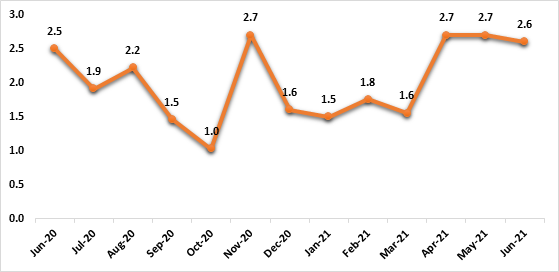
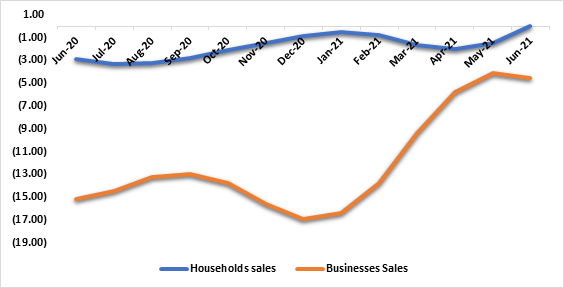
The annual credit extended to Namibia’s private sector increased to 2.6% for June 2021  from 2.5% recorded for June 2020 (See figure 1 below). On a monthly basis credit extended to the private sector between May and June 2021 recorded a growth of 0.3%, that came from for mortgage loans. Despite the small uptick for mortgage loans for June 2021,  overall credit remains subdued due to low levels of economic activity, which translate into low earnings for individuals and businesses. The slow growth of credit is  observed in all credit categories  largely due to slower economic activity coupled with income uncertainties as a consequence of the impact of the Covid-19 pandemic. Meanwhile, instalment and leasing credit for businesses declined by 7.4% and for the households grew by 1.0% between June 2020 and June 2021.

Figure 1 : Annual % changes for the Private Sector Credit Extension

Source: BON

Figure 2: Annual % changes for the Private Sector Credit Extension

Source: BON

Figure 3: Households and Businesses Instalment sales Index YoY%

Source: BoN &HEI RESEARCH

Outlook

There are no green shots on the horizon as the domestic economic activity remains subdued and there are no catalysts for economic growth at present. Households and businesses remain uncertain about future income and thus there is no confidence to take up credit, as a result we do not expect to see a recovery in credit extension in the short to medium term.


Copyright © HEI 2026
This is the right footer